
Introduction
Many people believe that eating a balanced diet with fruits and vegetables is enough to stay healthy. But recent research shows something surprising even a small amount of ultraprocessed foods in your daily meals may harm your brain over time.
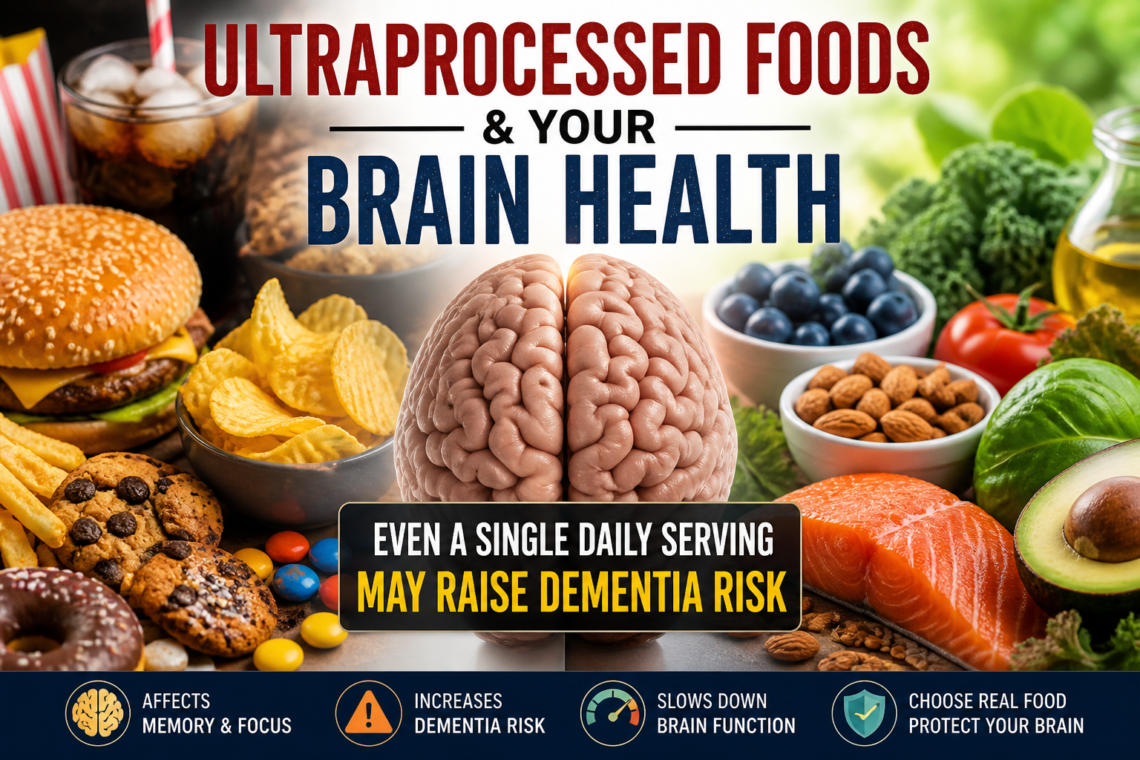
A new study suggests that adding just one serving of ultraprocessed food per day can increase the risk of dementia, even if your diet is otherwise healthy.
What Are Ultraprocessed Foods?
Ultraprocessed foods are products that go through multiple industrial processes and contain artificial ingredients, preservatives, and additives.
Common examples include:
- Packaged chips
- Sugary cereals
- Soft drinks
- Frozen meals
- Processed meats
These foods are designed to be convenient and tasty but often lack essential nutrients needed for brain health.
How Ultraprocessed Foods Affect Brain Health
Research shows a strong connection between ultraprocessed foods and reduced brain function.
Key effects:
- Lower attention span
- Slower information processing
- Increased risk of cognitive decline
- Higher chance of developing dementia
Even a 10% increase in ultraprocessed food intake may significantly impact your brain over time.
Why Even Small Amounts Matter
You might think, “I only eat junk occasionally.” But the problem is consistency.
A small daily habit like eating a bag of chips or cookies can add up over the years and increase your dementia risk.
Studies show that:
- Regular intake leads to gradual brain changes
- Effects build silently over time
- Midlife diet plays a major role in future brain health

The Link Between Ultraprocessed Foods and Dementia
The connection comes from several factors:
1. Poor Nutrient Quality
Ultraprocessed foods lack vitamins, minerals, and antioxidants that protect the brain.
2. High Sugar and Fat Content
Excess sugar and unhealthy fats can damage brain cells and increase inflammation.
3. Gut-Brain Connection
These foods negatively affect gut bacteria, which plays a key role in brain function.
4. Increased Health Risks
Regular consumption is linked to:
- Type 2 diabetes
- Obesity
- High blood pressure
All of these increase the risk of dementia.
What the Research Says
- Increasing ultraprocessed foods by 10% can raise the risk of cognitive impairment
- High intake is linked to faster mental decline
- Replacing processed foods with whole foods can reduce risk by up to 12%
Best Diet for Brain Health
To protect your brain, focus on whole, natural foods.
Include more:
- Fresh fruits and vegetables
- Whole grains
- Nuts and seeds
- Healthy fats like olive oil
Diets like the Mediterranean and DASH diet are proven to reduce dementia risk.
Simple Ways to Reduce Ultraprocessed Foods
Start small and stay consistent:
- Replace chips with nuts or fruits
- Choose home-cooked meals over packaged food
- Read ingredient labels carefully
- Avoid foods with long ingredient lists
Conclusion
Even small amounts of ultraprocessed foods can have a long-term impact on your brain. The risk builds slowly, often without noticeable symptoms in the beginning.
Making simple changes today like choosing whole foods over processed ones can help protect your memory, focus, and overall brain health in the future.
FAQs
1. Do ultraprocessed foods really increase dementia risk?
Yes, studies show that regular consumption of ultraprocessed foods is linked to a higher risk of dementia and cognitive decline.
2. How much ultraprocessed food is too much?
Even a 10% increase in daily calories from ultraprocessed foods can negatively affect brain health over time.
3. Can I eat ultraprocessed food occasionally?
Occasional intake is less harmful, but daily consumption increases long-term risk.
4. What are healthier alternatives?
Whole foods like fruits, vegetables, nuts, and home-cooked meals are better for brain health.