

Table of Contents
Introduction: Getting to Know What is Somatic Yoga?
You might be looking for a softer and smarter approach to healing and heal if you’ve been feeling stressed all the time, rigid in your body, emotionally drained, or detached from yourself. A lot of people start to wonder what is somatic yoga and why it has gotten so popular in mind-body wellness practices at this point.
Somatic yoga is more than another type of yoga or fitness craze. This is a very healing method that focusses on the neurological system and assists you in reconnected with your entire being about the inside out. Somatic yoga is different from regular yoga in that it doesn’t focus on holding postures, stretching deeply, or getting perfect alignment. Instead, it focusses on moving slowly and mindfully, being aware of your body, and getting input from your senses.
You need to know what somatics is, which is the examination of how one feels as it is felt from the inside, to really comprehend what is somatic yoga. Somatic yoga uses gentle movements based on yoga to help with healing, stress alleviation, psychological harmony, and permanent physical health.
This detailed guide will teach you what is somatic yoga, the way it works, the advantages it has, how it varies from normal exercise, and why somatic yoga movements are particularly effective for beginning practitioners, stress relief, balancing cortisol levels, boosting the immune system, and overall mind-body health.
What is somatic yoga? A definition of somatic yoga

We require to start with the definition of somatic yoga in order to clearly answer the question, “What is somatic yoga?”
Somatic yoga is a type of yoga that focusses on how your body feels on the inside rather than how it looks on the outside. It uses ideas from somatic education, neurobiology, gentle yoga, and movement therapy. The goal is to teach the nervous system and the brain to let go of long-term muscle tension, enhance how you move, and bring the body’s natural equilibrium back.
Somatic yoga doesn’t force its participants into lengthy stretches or stiff poses like regular yoga does. Instead, the actions are deliberate, controlled, and planned. Instead of forcing your body to move in a certain way, you should pay attention to how it moves and experience it.
In short, somatic yoga is about:
A movement practice based on the nervous system
A way to mend and be healthy that works for both the mind and body
A soft way to let go of stress, trauma, and anxiety
A less intensive kind of yoga that is good for you
People typically employ somatic yoga therapy to deal with chronic pain, mental stress, burnout, bad posture, and problems with their nervous system.
Where somatic yoga and somatic therapy came from
Knowing where somatic yoga comes from will help you comprehend what it is.
The teachings of Thomas Hanna, as well as Moshe Feldenkrais, and additional early somatic educators led to the development of somatic practices. These strategies were made to aid people with chronic pain, muscle imbalances, and stress-related disorders by retraining the relationship between the brain and body.
Yoga, on the contrary, has been around for a long time and is based on bringing together the intellect, physique, and breath. Somatic yoga combines these two worlds by using movements that are inspired by yoga but seen through a somatic perspective.
Somatic yoga treatment is a mix of:
- Neuroscience today
- Movement with awareness
- Awareness of breath
- Feedback from the senses
- The philosophy of yoga
This combination renders somatic yoga especially good for people who live busy lives full of stress, sitting down all the time, and overloading their neural systems.
The Science Behind Somatic Yoga: How It Works
People generally want to know how somatic yoga works when they ask what it is.
Somatic yoga executes by focussing on the sensory-motor system, which is made up of nerves that connect the brain to the muscles. Stress, trauma, and routines that happen over and over again can make the brain keep muscles tense. This makes things stiff, painful, tired, and hard to move over time.
Somatic yoga moves are slow and focused, and they do the following:
- Make your senses more aware
- Stop your muscles from getting tense all the time.
- Teach the brain again
- Get back voluntary control of your muscles
Some people term this process “pandiculation,” which is a natural movement reaction that is like stretching and yawning.
When you do somatic yoga regularly, your brain and body learns that it’s okay to relax, which lets your muscles relax on their own without having to force them.
What Makes Somatic Yoga Exercises Different
Even though somatic yoga movements seem easy, they have a big effect.
Instead of holding positions for a lengthy time, you can gently raise, lower, rotate, or move portions of your body while paying special attention to how they feel. It’s more important how the motion feels than how it looks.
Some things that are common in somatic yoga exercises are:
- Moderate and controlled movements
- Small spectrum of motion
- Taking breaks often to feel things
- Breathing together
- No pushing through pain or discomfort
These exercises assist your muscles get back to their normal length, lower stress, and make your coordination better.
Why Somatic Yoga for Beginners Is the Best
A lot of folks who are fresh to movement practices are scared of traditional yoga. This is one reason how somatic yoga for beginners works so well.
For beginners, somatic yoga is:
- Open to people of all fitness levels
- Safe for persons who are hurt or have long-term pain
- Soft on muscles and joints
- Not competitive and not judgemental
You don’t need to be flexible, strong, or have done yoga before. You only need to be willing to slow down down and pay attention to your body.
Learning what is somatic yoga and can alter your life for the better if you’re just starting out because it establishes trust between the both body and mind instead of imposing change.
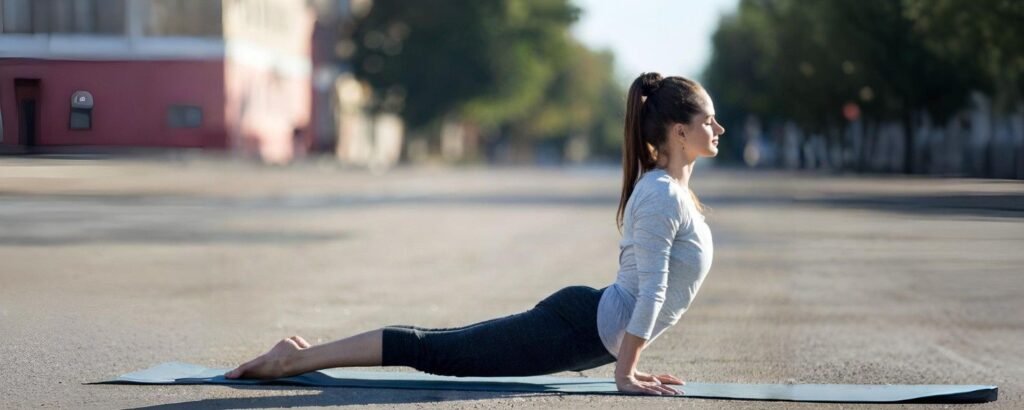
Benefits of Somatic Yoga for the Body, Mind, and Heart
After asking “What is somatic yoga?” one of the most popular enquiries is “What are the benefits?”
- Physical Benefits
- Less chronic pain
- Better posture and movement
- More awareness of your body
- Better balance and coordination
- Less stiff muscles
- Benefits for the mind and body
- Less stress and worry
- Better control of emotions
- Better focus and clarity
- More peace of mind
- Less burnout
- Benefits for the Nervous System
- Activation of the parasympathetic system
- Lessened fight-or-flight reaction
- Better sleep quality
- Cortisol levels that are in balance
These physical yoga benefits render it a great way to stay healthy for a long time.
The connection between somatic yoga and mind-body wellness
At the centre of somatic yoga is mind-body wellbeing.
Somatic yoga is different from workouts which treat the human body like a mechanical device because it knows that stress, thoughts, and feelings may all have an effect on physical health. Tight shoulders, back ache, jaw strain, or shallow breathing are all signs of long-term stress.
Somatic yoga helps by working on the nerve system:
Let go of mental stress that has built up
Make communication between your mind and body better
Get better at dealing with stress
Develop self-awareness
This means that somatic yoga is more than simply a way to work out; it’s a way to improve your whole health.
Somatic Yoga Therapy: Rehabilitation That Goes Beyond Exercise
People typically employ somatic yoga therapy in healthcare and therapeutic contexts.
It can help persons who are suffering with:
- Long-term discomfort
- Trauma and PTSD
- Anxiety and sadness
- Fibromyalgia
- Imbalances in posture
Therapists utilise somatic yoga therapy in order to help clients regulate their nervous systems without causing any new trauma or using force.
Knowing what is somatic yoga is might help you understand why more and more health professionals are recommending it.
Yoga and somatics are good for your immune and respiratory health.
Yoga and somatics are closely related to each other when it comes to keeping the immune and respiratory systems healthy.
While the body is always under stress, the immune system doesn’t work as well and respiration gets shallow. Somatic yoga helps the immune system and breathing by:
- Promoting breathing from the diaphragm
- Lessening long-term stress
- Better lung expansion via improving posture
- Increasing vagal tone
Gentle somatic yoga moves assist the body get into a healing condition, which helps the immune system work better.

Somatic Yoga to Get Rid of Cortisol and Stress
Having too much cortisol in your body might make you gain weight, feel tired, anxious, and have trouble sleeping.
The goal of somatic yoga for cortisol detox is to soothe the nervous system, not burn calories. Somatic yoga helps by triggering the parasympathetic response:
- Naturally lower cortisol
- Make sleep cycles better
- Lower emotional reactivity
- Encourage a balance of hormones
This serves as a reason why people who are interested in somatic yoga typically use it to deal with stress.
Conclusion (What is Somatic Yoga)
Here are some reasons why somatic yoga is important today.
In a world that moves quickly and is full of stress, learning about somatic yoga can help you heal in a way that respects your body’s intelligence. Somatic yoga isn’t about working harder; it’s about listening more closely.
Somatic yoga is a long-term, kind way to get healthy, whether you’re a novice, managing stress, or looking for long-term health. In the above Blog , we explained in-depth about “What is Somatic Yoga.”
FAQ (Related to What is Somatic Yoga)
What is somatic Pilates?
What is somatic pilates is another topic that comes to mind.
Somatic Pilates is a mix of classical Pilates and somatic awareness. Somatic Pilates doesn’t focus on how hard you work out or how many times you do it. Instead, it focusses on moving mindfully, getting feedback from your nervous system, and gently re-educating your muscles.
Pilates is all about strength and control, whereas somatic Pilates is all about ease, efficiency, and being aware of your body.
What is somatic release? is another prevalent question.
Somatic release is a method of letting go of long-term muscle tension and stress by being aware of your body and moving mindfully. In somatic yoga, the body lets go of tension when the circulatory system sensation of safe.
Somatic release does not involve stretching that is pushed. It is a psychological reset that makes it easy for muscles to relax.
What makes somatic yoga different from regular yoga?
To grasp what is somatic yoga, you need to know how it is different from ordinary yoga.
Yoga on a regular basis:
Concentrates on stances and how they line up
Often focused on goals
Can be hard on the body
Focusses on strength and flexibility
Somatic Yoga:
Concentrates on feeling and awareness
Focused on the process
Calm and helpful
Focusses on controlling the nerve system
Both are useful, yet somatic yoga is particularly useful for recuperation and stress alleviation
Is somatic yoga good for you?
Yes, somatic yoga is helpful for you, especially if you’re stressed, in pain, or burned out.
Somatic yoga helps with long-term health instead of short-term performance since it cooperates with the nerve system. It is safe, flexible, and very healing.
Does somatic yoga help you lose weight?
Somatic yoga isn’t a standard workout for losing weight, but it can help you lose weight in other ways.
Somatic yoga makes the inside of your body healthier for weight balance by lowering cortisol, helping you sleep better, and minimising the things that make you want to eat when you’re upset.
What’s the difference between yoga and somatic exercises?
Yoga frequently focusses on how things look on the outside, while somatic activities focus on how things feel on the inside.
Somatic exercises are more gradual, kinder, and more centred around retraining the nerve system than on making the body strong
What does somatic release mean?
Somatic release is a method of letting go of long-term muscle tension by moving mindfully and regulating the neurological system.
What makes somatic yoga different from normal yoga?
Regular yoga is more about poses and flexibility, while somatic yoga is more about feeling and repairing the nervous system.
Is somatic yoga healthy for you?
Yes, especially for relieving stress, managing discomfort, and keeping your emotions in check.
Does somatic yoga help you lose weight?
It helps keep hormones in check and lower stress, which may help with healthy weight management in an indirect way.
What sets yoga apart from somatic exercises?
Yoga is all about prescribed positions, while somatic exercises are all about becoming more aware of your body and gently retraining how you move.