

In our hyper-connected, fast-paced culture, it is easy to fall into a state of chronic physical and mental stagnation. Many of us spend up to eight hours a day anchored to an office chair, staring at screens, which leaves our hip flexors locked, our shoulders rounded, and our minds running on a loop of daily anxieties. When looking for a solution, the fitness industry often tells us we need grueling, hour-long gym sessions to see a difference.
But what happens if you choose a gentler, more sustainable path? What happens if you commit to just 15 to 20 minutes of conscious movement every single day?
At FitnessToday, we decided to skip the exaggerated promises and look at the realistic, science-backed shifts that occur during a short commitment. This guide explores the day-by-day transformations of what happens when you practice yoga daily for 10 days. From initial physical adjustments to deeper neurobiological shifts, here is what genuinely happens to your body and mind in less than two weeks.
Essential Trust, Safety, and Biomechanical Instructions
Before rolling out your mat, it is critical to set a baseline of realistic expectations and safety. Yoga is an incredible tool for healing, but it must be approached with mindfulness rather than competition.
Pre-Practice Safety Checklist:
- Check Your Ego at the Mat: Yoga is not about forcing your body into a picture-perfect posture or matching the flexibility of an influencer. True progress comes from listening to your body’s boundaries. Never push your joints into sharp, biting pain.
- Modify for Your Anatomy: If your hamstrings are tight, bend your knees during a forward fold. If your wrists ache in a downward dog, drop to your forearms or use yoga blocks to alter the angle of gravity.
- Pre-Existing Conditions: If you are navigating structural spinal issues like a herniated disc, extreme joint laxity, or severe vertigo, skip advanced inversions or deep twists until you consult your doctor. If you are recovering from physical lower back pain, take a look at our targeted guide on yoga for back pain relief to build a safe foundation.
The 10-Day Daily Yoga Timeline: What Genuinely Changes
[ Days 1-3 ] ──────► Body Awareness & Initial Tightness
[ Days 4-6 ] ──────► Improved Mobility & Morning Focus
[ Days 7-9 ] ──────► Enhanced Sleep Quality & Nervous System Balance
[ Day 10 ] ──────► Seamless Habit Integration & Self-Care Mindset
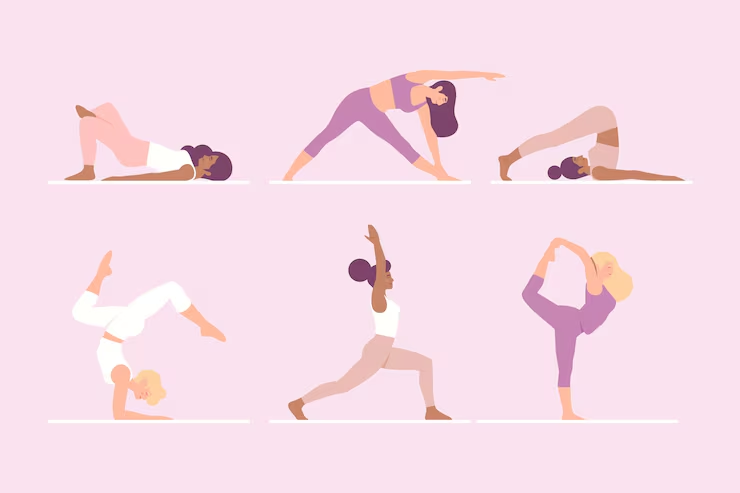
Days 1–3: The Awakening of Body Awareness and Facing Tightness
- Difficulty Level: Beginner (Mental Adaptation)
- What to Expect: The first three days of a daily practice are often a wake-up call. As you step onto the mat and hold initial poses like Downward-Facing Dog or Child’s Pose, your body highlights exactly where it has been holding onto tension. Your hips may feel locked, your lower back might feel tight, and keeping your mind quiet for 15 minutes can feel surprisingly difficult.
- The Science: This initial phase is all about proprioception—your brain’s awareness of where your body is in space. By moving slowly and focusing on your breath, you wake up sensory receptors in your muscles and fascia that have been dulled by long hours of sitting. Even if you feel stiff during these first few days, the deep breathing helps activate your parasympathetic nervous system, leaving you with a noticeable sense of calm after you step off the mat.
Days 4–6: Improved Mobility and Deeper Mental Focus
- Difficulty Level: Intermediate (Building Structural Endurance)
- What to Expect: By the middle of your 10-day journey, a shift begins to occur. The stubborn morning stiffness starts to soften. Sitting at your desk for long stretches feels less draining, and you may notice your posture aligning naturally without having to force it. Mentally, the practice transforms from a physical task into a reliable daily reset.
- The Science: At this stage, your muscles are benefiting from increased blood flow and oxygenation, and your joints are producing more synovial fluid—the body’s natural lubricant. Concurrently, matching your movement to your breath (Vinyasa) acts as a form of active meditation. This reduces the morning surge of cortisol (the primary stress hormone), helping you start your workday with a clearer, more resilient focus.
Days 7–9: Deeper Sleep Quality and Steady Energy
- Difficulty Level: Intermediate (Nervous System Regulation)
- What to Expect: This is where the compounding benefits of a daily practice show up in your everyday life. Falling asleep at night becomes smoother, your rest feels deeper, and you wake up feeling genuinely refreshed. Instead of experiencing that typical 3 PM energy crash that sends you searching for another cup of coffee, your energy remains remarkably steady throughout the day. Your body feels lighter, more integrated, and completely free of chronic tension.
- The Science: Practicing yoga daily helps regulate the autonomic nervous system by strengthening your vagal tone. Stimulating the vagus nerve acts as a natural brake on your stress response, lowering your resting heart rate and blood pressure. This shifts your body out of a low-grade, stress-induced state of alertness and allows it to rest and digest fully at night, which optimizes your sleep cycles. If you want to dive deeper into the science of nervous system regulation, see our comprehensive guide on vagus nerve massage for heart palpitations.
Day 10: Seamless Habit Integration and a Self-Care Mindset
- Difficulty Level: Advanced (Behavioral Consistency)
- What to Expect: On the final day of your experiment, you realize that yoga has stopped feeling like an item on your to-do list and has become a natural part of your daily routine. While you won’t magically double your flexibility or touch your toes effortlessly in just 10 days, the true transformation is psychological. You have built a deeper connection with your body, lowered your baseline stress, and created a reliable habit of daily self-care.

Supporting Your Daily Practice: Long-Term Habits
A 10-day challenge is an exceptional catalyst, but the real value lies in using it as a stepping stone for long-term health. To build on the momentum you’ve created, consider incorporating these supportive habits:
- Optimize Your Pre-Bed Routine: The relaxation you feel on the yoga mat can be extended into your entire evening. To protect your sleep quality from the disruptive effects of blue light and late-night stress, try pairing your daily yoga with our recommended checklist of healthy evening habits that improve sleep quality.
- Explore Somatic Healing: If your 10-day experience showed you how much emotional stress you store physically in your body, consider moving toward deeper mind-body modalities. Discover how trauma and tension release work by reading our expert guide: what is somatic yoga: powerful mind-body healing.
- Fuel Your Practice with Intentional Nutrition: A daily movement routine naturally goes hand-in-hand with cleaner eating habits. To support your body’s recovery and keep your energy levels high, focus on whole, nutrient-dense foods while steering clear of hidden energy drainers. Learn how to protect your cognitive energy with our ultraprocessed foods brain health guide.
Final Thoughts from FitnessToday
Committing to a daily yoga practice for 10 days won’t completely reshape your life overnight, but it will fundamentally change how you inhabit your body and mind each day. It proves that you don’t need a grueling fitness regime to experience meaningful, lasting wellness. By starting small, moving with intention, and staying consistent, you can build a strong foundation for a vibrant, lower-stress life.
Frequently Asked Questions (FAQs)
Q: Is it truly safe to practice yoga every single day without taking a rest day?
Yes, it is entirely safe to practice yoga every day, provided you vary the style and intensity of your sessions. If you alternate between intense, strength-focused power yoga and gentle, restorative, or somatic sessions on other days, your body won’t overtrain. Listen to your body’s signals and let your daily practice adapt to your energy levels.
Q: What style of yoga is best for a beginner starting a 10-day challenge?
For absolute beginners, starting with Hatha, Yin, or Restorative yoga is highly recommended. These styles focus on fundamental alignments, slower paces, and holding poses longer, which allows you to learn the basics safely. Avoid advanced Vinyasa or Hot Yoga classes until you have built a comfortable foundation of body awareness and stamina.
Q: What should I do if I can’t touch my toes or keep my legs straight during the poses?
Not being flexible is exactly why you practice yoga, not a reason to avoid it! Millions of practitioners cannot touch their toes. Use modifications: bend your knees generously during forward folds, use a strap to extend your reach, or place yoga blocks under your hands to bring the floor up to you. Over time, your flexibility will naturally improve.
Q: Can a short 15-minute daily yoga routine help me lose weight?
While a gentle 15-minute routine won’t burn as many calories as a high-intensity cardio session, it supports weight management in other powerful ways. Daily yoga lowers cortisol levels, which helps reduce stress-induced emotional eating and stubborn fat storage around the midsection. For an effective strategy to trim fat naturally, look at our comprehensive guide on how to lose belly fat naturally.

Justin is a wellness and fitness content writer focused on yoga, natural health, nutrition, and sustainable lifestyle habits. She creates easy-to-follow guides that help readers improve flexibility, strength, mental wellness, and overall fitness through practical daily routines. Her work at FitnessToday combines research-backed wellness information with beginner-friendly advice designed for real-life results.
Discover more from Fitness Today
Subscribe to get the latest posts sent to your email.


